Turning The Tide: How To Harness the Americas Partnership For Economic Prosperity To Deliver An ISDS-Free Americas
October 25, 2023
Introduction
In June 2022, during the Summit of the Americas, U.S. President Joe Biden announced the launch of negotiations for an Americas Partnership for Economic Prosperity (APEP). The Biden administration hopes this initiative can rebuild relationships with countries in the region by increasing cooperation to address economic development and inequality, climate, and other challenges affecting the entire Western Hemisphere. In January 2023, 11 countries announced their intention to participate: Barbados, Canada, Chile, Colombia, Costa Rica, Dominican Republic, Ecuador, Mexico, Panama, Peru, and Uruguay.1 The 12 APEP countries subsequently signed a joint declaration outlining ambitious objectives for the partnership. This includes pursuing an inclusive, human rights-based approach to economic policy that ensures no one is left behind; addressing climate change through mitigation, adaptation, and resilience strategies, as well as the promotion of clean and renewable energy and energy efficiency; improving access to and delivery of public services; and encouraging private sector investment that meets environmental, social, and governance criteria.2
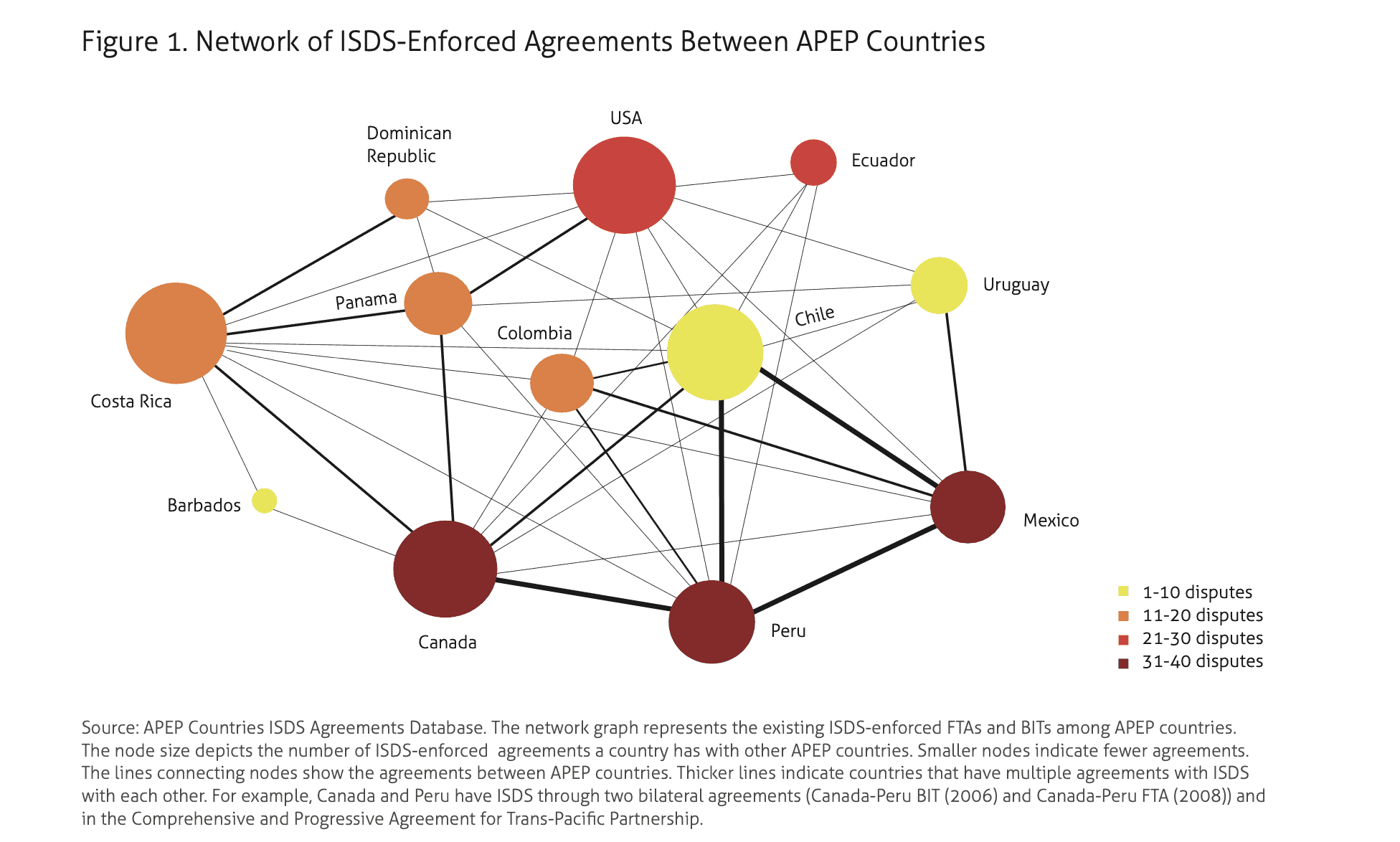
These core objectives lie at the heart of APEP’s vision, which is based on the advancement of democratic values, the rule of law, and the aspiration to promote sustainable high- quality investment across the region. To fulfill this vision and its associated goals, the participating countries must address the severe challenges posed by the investor- state dispute settlement (ISDS) regime and its escalating threats to the transition to a post-carbon society and the establishment of resilient public health systems in the Americas. There are 43 legacy ISDS-enforced trade and investment agreements in the Americas now being used to attack such initiatives. This white paper explains how the APEP negotiating process can be leveraged to dismantle ISDS within the region. It includes original data describing the scope of the problem and provides pathways to address both the international and U.S. domestic law requirements for an effective ISDS exit.